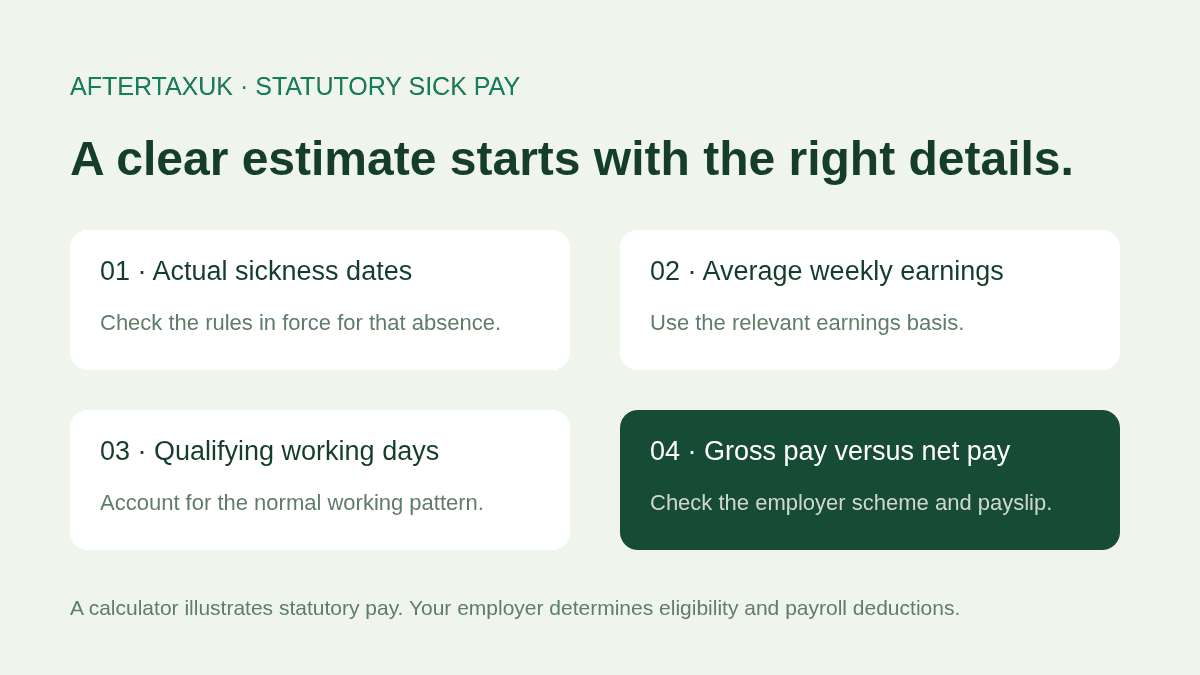
The rules changed from 6 April 2026
The 2026/27 weekly amount is the lower of £123.25 and 80% of average weekly earnings. The old earnings threshold and three waiting days were removed. An estimate using £116.75, an old Lower Earnings Limit or automatic unpaid waiting days will not describe the current rules.
SSP is normally available for up to 28 weeks, subject to eligibility and linked-period rules. If an absence crosses a change of rules, check the official transition guidance rather than applying one current-year formula to the entire history.
Two worked examples
| Illustrative average weekly earnings | 80% of earnings | Weekly SSP | Per qualifying day, five-day pattern |
|---|---|---|---|
| £100 | £80 | £80 | £16 |
| £300 | £240 | £123.25 | £24.65 |
These examples assume an eligible employee, five qualifying days each week and no contractual top-up. They are gross statutory amounts. Change the qualifying-day pattern and actual average earnings rather than treating the five-day illustration as universal.
Why the payslip may show a different net amount
SSP is paid through payroll. Income Tax depends on the tax code, basis and relevant earnings; NI normally depends on the pay period. Ordinary earnings, bonuses, pension deductions and statutory pay can appear together on one payslip.
Adding SSP to a salary and applying a selected flat tax rate is not a complete payroll calculation. Use the gross statutory schedule for budgeting, then check the actual payslip or ask payroll how deductions were calculated.
What to check with your employer
- The full dates of absence and days you would normally work.
- The earnings period used for average weekly earnings.
- Whether a previous absence is linked and how much SSP entitlement remains.
- The notification/evidence requirements and any contractual sick-pay top-up.
- The reason and next steps if SSP is not payable.
Check the current official guidance
Frequently Asked Questions
Clear answers based on official HMRC rules and statutory guidance.