A gap is a question, not a bill
Your National Insurance record may show a year as incomplete. Before buying voluntary contributions, check whether a credit is available and whether filling the year would actually increase your forecast.
Credits can protect a contribution record during eligible periods away from paid work. The rules depend on the benefit, caring role or other circumstance; some credits are awarded automatically and others need a claim.
Common credit routes worth checking
- Child Benefit: a qualifying claim for a child under 12 can protect NI credits for the claimant. A parent may be able to register and opt out of payments while retaining eligible credits; check who is named on the claim.
- Caring: Carer’s Credit has its own conditions, including a caring-hours test. It is not identical to Carer’s Allowance, and receiving no allowance does not by itself rule out a credit.
- Benefits and work-related situations: check the official credits list for the specific benefit or circumstance and whether a separate application is needed.
- Errors or missing periods: keep employment, benefit and caring records and ask HMRC to check the NI record where the entry appears wrong.
A practical check before a voluntary payment
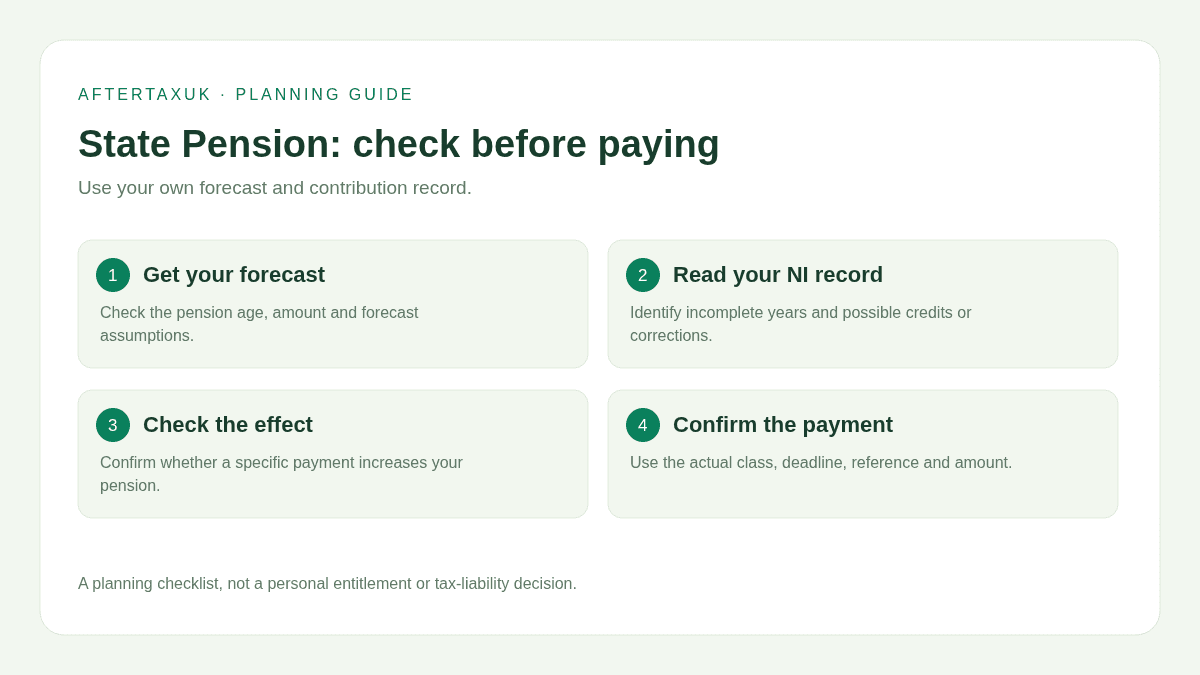
- Get your State Pension forecast and NI record.
- Identify the incomplete year and the period that caused the gap.
- Check whether an eligible credit or correction can fill it.
- Ask whether payment for that year would increase your State Pension and by how much.
- Confirm the payment class, deadline, reference and exact amount with the official service.
Voluntary payments are not a guaranteed investment return. You may already be on course for the maximum, have a transitional record or be able to build qualifying years through future work or credits.
Use the official record and current rates
The full pension amount and voluntary contribution rates change over time. Read the current rate for the payment or pension year rather than relying on an old weekly figure labelled as current.
Read how qualifying years affect the State Pension.
Frequently Asked Questions
Clear answers based on official HMRC rules and statutory guidance.