Who the simple 35-year illustration fits
For a National Insurance record that starts after April 2016, 35 qualifying years are normally needed for the full new State Pension. A minimum qualifying period, usually 10 years, is normally needed for any new State Pension.
That is not a universal rule for everyone reaching State Pension age. A record before April 2016 uses transitional calculations, and periods of contracting out can change the starting amount. Some people need more than 35 years to reach the full rate; others already have a protected amount.
Qualifying years can come from different routes
Contributions from eligible employment or self-employment, qualifying NI credits and appropriate voluntary contributions can build a record. Paying no employee NI on a particular payslip does not necessarily mean the year is lost.
Conversely, adding 52 weeks of income and comparing it with a weekly threshold is not enough to verify every real contribution record. Employment periods, classes and the way contributions or credits are recorded matter. Use the official NI record.
Why one purchased year may add nothing
A year helps only if the applicable record and forecast rules allow it to increase entitlement. For example, a person already forecast to reach the maximum through future qualifying years may not need to buy an older gap. A pre-2016 year may interact with the transitional starting amount differently from a later year.
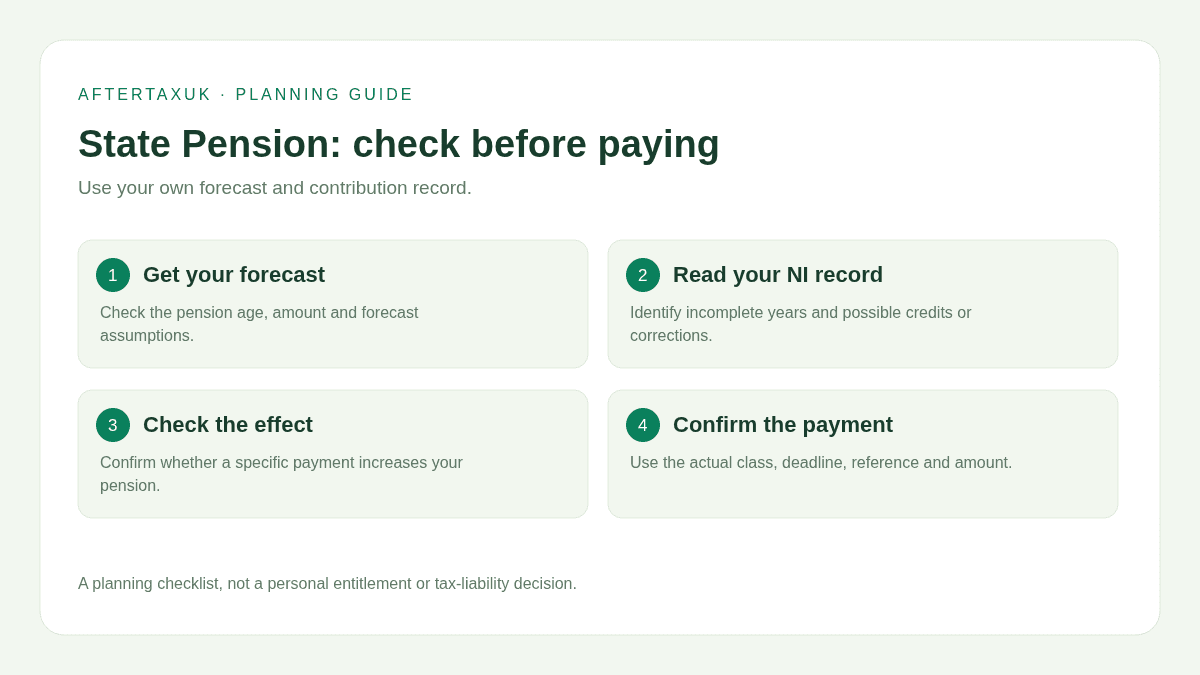
Ask for the effect of the particular year before paying. Do not assume every purchase adds one thirty-fifth of the full pension or use a universal break-even period for all taxpayers and records.
Use the official record and current rates
The full pension amount and voluntary contribution rates change over time. Read the current rate for the payment or pension year rather than relying on an old weekly figure labelled as current.
Check potential credits before paying for a gap.
Frequently Asked Questions
Clear answers based on official HMRC rules and statutory guidance.