Start with the company and the individual
Salary is processed through PAYE. It can attract employee and employer National Insurance, and allowable salary costs usually reduce company taxable profits. Dividends come from available distributable profits after Corporation Tax; they are not a deductible salary expense.
Your other income, available Personal Allowance, Corporation Tax position, associated companies, accounting period and pension arrangements affect the result. Compare the total company cost and your personal net receipt rather than one tax rate in isolation.
The verified 2026/27 thresholds
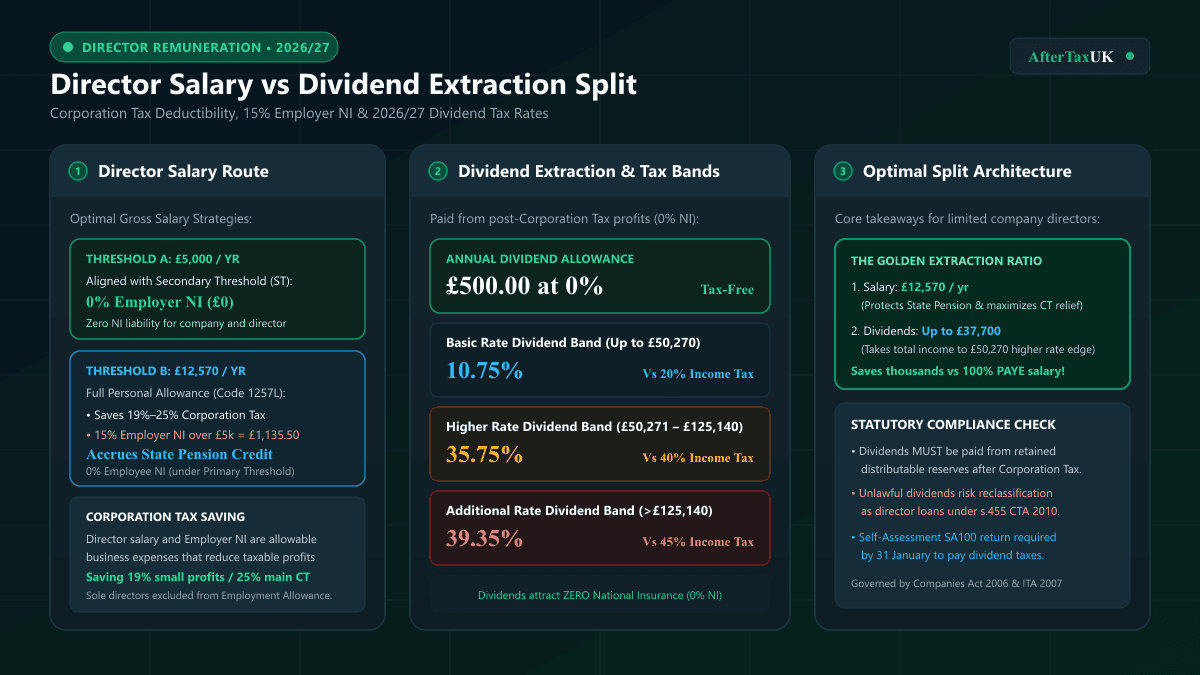
For a standard adult director, the annual employer NI secondary threshold is £5,000 and the employee primary threshold is £12,570. The annual Lower Earnings Limit is £6,708. Reaching the Lower Earnings Limit can help build a qualifying National Insurance record; check your actual record and director payroll treatment.
Employment Allowance is up to £10,500 for eligible employers. A company is generally excluded if it has only one director and that director is the only employee liable for secondary Class 1 NI. Do not assume your company qualifies simply because it runs payroll.
How dividend tax works
The dividend allowance is £500. Dividends above the available allowances are taxed at 10.75% in the basic-rate band, 35.75% in the higher-rate band and 39.35% in the additional-rate band for 6 April 2026 to 5 April 2027. Dividend income still affects which bands and allowances apply.
For example, if £2,500 of dividends remains taxable after allowances and all falls within the basic-rate band, dividend tax is £268.75. This is a personal dividend-tax example only: it excludes the company tax already paid to generate the dividend.
Pensions and the next decision
Employer pension contributions may be an alternative to additional cash remuneration. Corporation Tax deductibility depends on the business circumstances; personal annual-allowance rules, taper, the money purchase annual allowance and other pension inputs can also matter.
Use the salary/dividend calculator to explore an estimate, then check its rates and assumptions against these sources. Ask an accountant to review the proposed payroll, dividends and pension contributions before making a company-specific decision.
Explore the next step
Check the tool's supported scenario and assumptions before using its estimate.
Estimate salary and dividend take-home payFrequently asked questions
Frequently Asked Questions
Clear answers based on official HMRC rules and statutory guidance.
Sources and further checks
Check the source that applies to your circumstances and effective period. Official guidance can change.