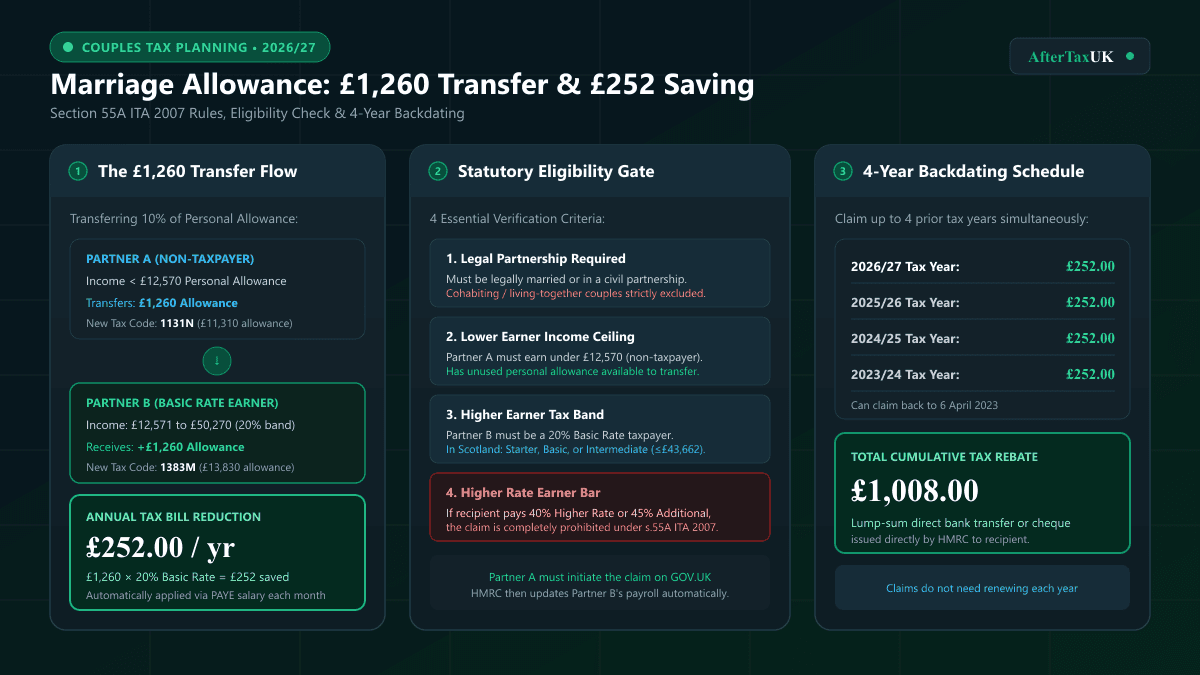
Check both partners’ eligibility
The transferor normally has income below the Personal Allowance and the recipient must meet the tax-band conditions. In Scotland, the eligible recipient bands differ from the England/Wales/Northern Ireland description: check the official rules for both partners.
Unmarried partners cannot claim Marriage Allowance merely because they live together. If either person was born before 6 April 1935, Married Couple’s Allowance may be the relevant alternative; do not confuse the two reliefs.
Why the household saving can be less than £252
Transferring allowance reduces the transferor’s available Personal Allowance. If their income then exceeds that reduced amount, they may start paying Income Tax. The recipient’s reduction is also limited by their tax liability and the applicable rules.
For example, a recipient who can use the full £252 reduction does not guarantee a £252 household saving if the transfer creates tax for the other partner. Compare the couple’s combined position rather than the recipient’s reduction alone.
Backdating and continuing claims
Eligible couples can check whether earlier years remain within the claim window, generally up to four previous tax years. Each year needs its own eligibility check and the amount available depends on that year’s rules and the tax paid.
A backdated payment is not guaranteed merely because a couple was married. Claims may continue in later years until cancelled or circumstances change, so review employment, pensions, taxable income, separation or other changes when relevant.
Apply through the official service
Use GOV.UK to check the current eligibility and application process. The transferor normally makes the claim. HMRC may adjust tax codes or process a repayment depending on the year and circumstances.
A calculator provides an estimate from the information entered. It is not confirmation that HMRC has accepted a claim, nor does it replace checking all taxable income and the correct jurisdiction.
Explore the next step
Check the tool's supported scenario and assumptions before using its estimate.
Check a Marriage Allowance estimateFrequently asked questions
Frequently Asked Questions
Clear answers based on official HMRC rules and statutory guidance.
Sources and further checks
Check the source that applies to your circumstances and effective period. Official guidance can change.